

Natural Environments
What it meant to live in the only world there was
This is the fourth article in December’s series, “Life on the Ground.”
Quick recap: In November, we climbed the Ladder of Abstraction. This month, we descended—exploring what life was actually like before we started climbing. We’ve visited a world of immediate feedback, where the mind could rest because you always knew how things were going. We’ve explored experiential learning, where knowledge moved through watching and doing rather than symbols and abstraction.
This week: the physical environment itself. For most of human history, that meant what we now call “nature.” But they didn’t call it anything. It was just the world.
Let me take you somewhere.
It’s dawn, and you’re waking up. Not to an alarm. Not in a room. You’re waking up because the light is changing and the birds are shifting and your body knows, the way it has always known, that the day is beginning.
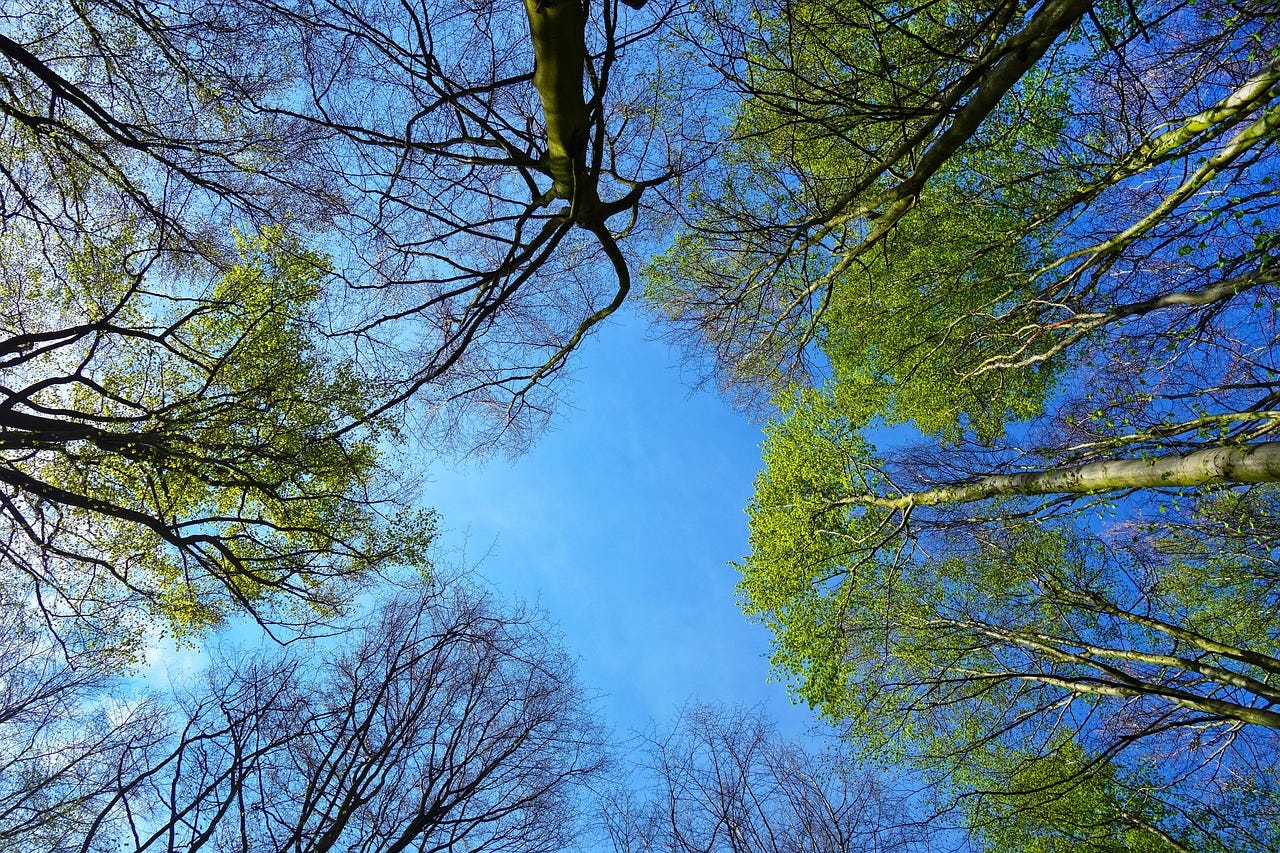
You open your eyes and you see sky. Maybe through a gap in a temporary shelter, maybe from a bed of leaves against a rock overhang. The first thing your eyes meet is not a ceiling, not a wall, not a screen—but the world itself. Moving. Alive. Already in progress.
The air is cool. It smells like soil, like green things, like the particular signature of this place at this season. A breeze moves across your skin. Somewhere nearby, water is running—a stream you’ve been camped beside for the past week.
You sit up, and you’re in it. Not looking at nature through a window. Not visiting nature on a weekend hike. You’re in it the way a fish is in water. It’s not a place you go. It’s the only place there is.
The World Before Walls
For most of human existence, “indoors” didn’t exist.
There were shelters for sleep and protection. But spending your waking life separated from sky and wind by walls and glass? Incomprehensible. Why would you?
The Hadza of Tanzania still live this way—small grass huts for sleeping, everything else under open sky. The Mbuti, the San, the Pirahã: same pattern. Shelter was minimal. The environment was everything.
Your nervous system was immersed in it. All day. Every day. Your entire life.
What the Day Felt Like
Light shifted as the sun moved. Temperature rose and fell. Sounds changed—morning birds, midday insects, evening frogs. You didn’t check the time. You felt it in the shadows, the quality of light, the forest’s rhythm.
Your visual field: organic shapes. Leaves, water, stone, clouds, people. Nothing flat. Nothing rectangular. Nothing emitting artificial light. Everything swaying, flowing, breathing.
The soundscape: continuous, complex, informative. Not noise—data. The rustle that meant wind versus animal. The bird call signaling safety versus the silence signaling danger.
The air: not filtered, not controlled. Carrying information—moisture, scent, temperature. You could smell rain coming.
This was the sensory world your nervous system was built for. Millions of years of calibration. Every system in your body tuned to exactly this.
The Nervous System’s Problem
Here’s what neuroscience helps us see: your body is still expecting that world.
There’s a theory called GUTS—the Generalized Unsafety Theory of Stress. The core idea is counterintuitive: the nervous system’s default state isn’t calm. It’s vigilance. Threat-readiness is the baseline.
What turns it off? Safety signals.
For millions of years, those signals came from the environment. The sight of familiar landscapes. The sounds of a living world going about its business. The presence of your people nearby. The sensory richness that meant: this place is known, this place has food, this place is home.
The nervous system isn’t activated by threat so much as it’s deactivated by safety. It’s constantly asking: “Is it safe? Is it safe? Is it safe?” And for most of human history, the environment kept answering: “Yes. Yes. Yes.”
Natural scenes produce brain patterns associated with wakeful relaxation. Natural soundscapes inform without demanding. The fractal patterns of trees and clouds match what the visual system expects. The living world provides a continuous stream of safety signals that tell the ancient systems: you can rest now.
The Great Enclosure
Then we moved inside.
Agriculture brought permanent structures. Industrialization brought factories and cities. By the twentieth century, you could spend your entire life indoors. Now most people do.
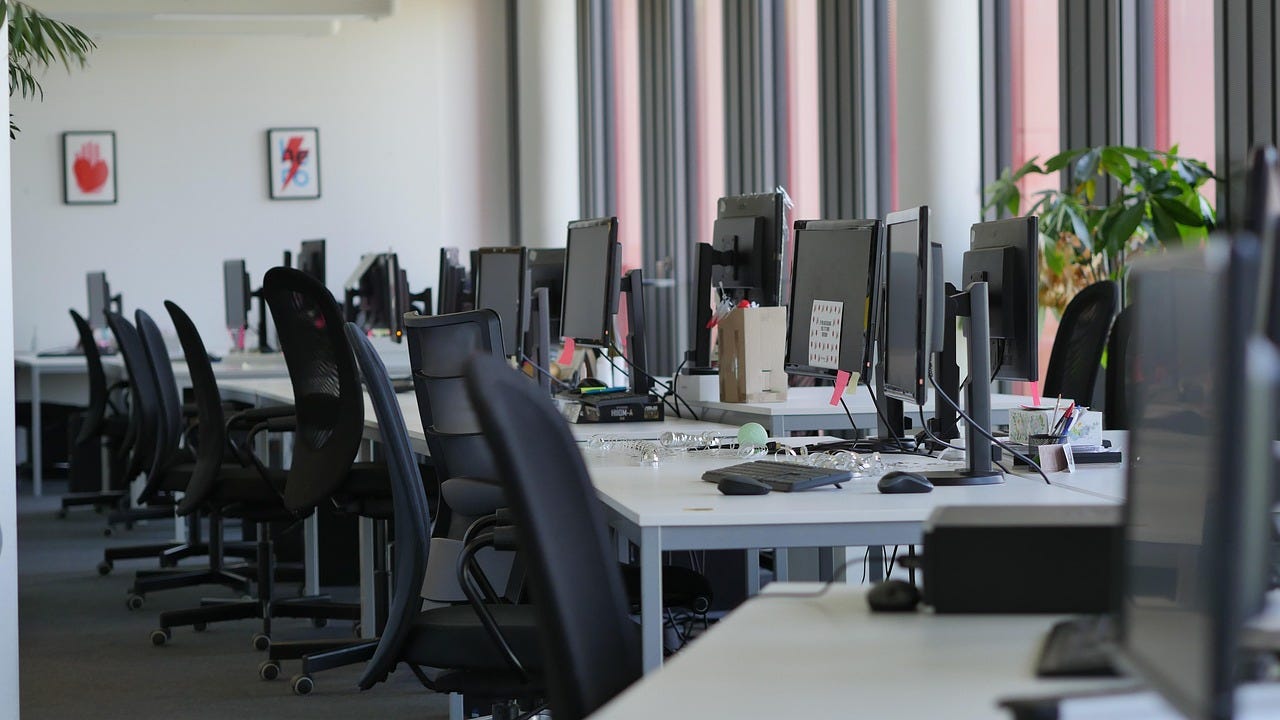
Wake in a sealed room. Commute in a vehicle. Work in a building. Exercise in a gym. Relax looking at a screen.
The outdoors became optional. A place to visit on the weekend if the weather’s nice.
For 95% of human history, the natural world was compulsory—the only reality available. In a few generations, we made it elective.
And the nervous system doesn’t understand. It’s still asking “Is it safe?”—and the fluorescent lights and rectangular walls and sealed air don’t answer. They’re not the signals it’s looking for.
So it keeps asking. Keeps scanning. Stays vigilant.
Not because the office is dangerous. But because nothing is telling it that it’s safe.
The Unfindable World
This is the modern condition: a nervous system searching for a world it can’t find.
Urban living correlates with higher anxiety, higher depression, elevated amygdala activity. Forest bathing—simply walking in the woods—drops stress hormones within minutes. Views of trees through windows improve hospital recovery times. Even images of nature calm the nervous system.
These aren’t luxuries. They’re the safety signals the system needs to stand down.
Without them, it stays activated. Not because something is wrong, but because nothing is telling it that things are right.
Windows Back
This is why time in nature feels like relief. Like clicking into place. Like a part of you finally getting what it was looking for.
Because that’s exactly what’s happening. The nervous system is finding the input it was calibrated for. The ancient systems are recognizing: this is the world. This is safe. You can rest.
You don’t have to go far. A park helps. A tree helps. Any contact with the living world helps. Even indoor plants and the sound of running water.
The Point
Difficulty relaxing and “‘unwinding” isn’t a personal flaw.
Your nervous system is waiting for safety signals that don’t come. It’s looking for the forest, the sky, the living world—the environment that for millions of years kept saying yes, it’s safe, you can rest. In the absence of those signals, it stays on. Scanning. Vigilant. Unable to settle.
You can’t fix this through willpower. You can’t convince your nervous system that the office is fine.
But you can feed it what it needs. Regular contact with the living world. Not as luxury. As maintenance.
Every time you step outside, feel moving air, look at a tree—you’re not just “getting fresh air.”
You’re letting the nervous system find what it’s looking for.
You’re returning to the ground.
Next week: Interconnected Self—how we understood ourselves in relation to others before we became individuals.
—James
Note on AI collaboration: The Alive Letter explores how humans can stay fully human while learning to work with modern technology. In that same spirit, I collaborate with AI in the creation of these articles. As an industrial/organizational psychologist who studies human-AI collaboration, I carefully guide, refine, and evaluate AI outputs. At its best, this partnership helps me more clearly and authentically communicate my own thoughts and perspectives than I am able to alone.